What is Robotic Process Automation and where does it end?
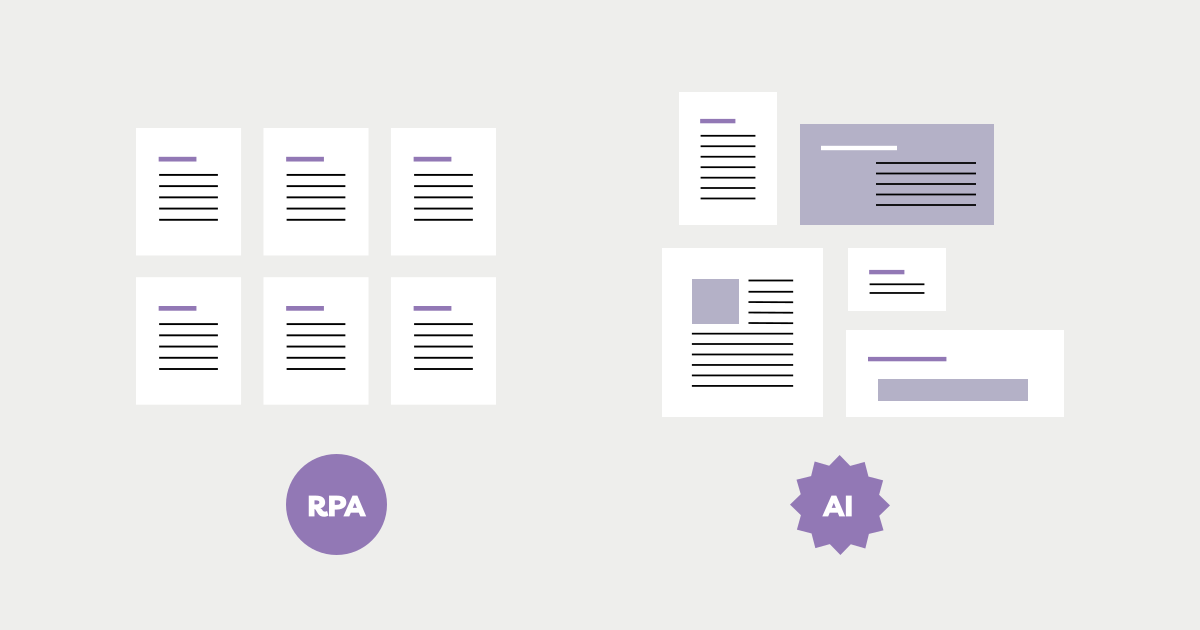
RPA sounds like robots roaming factory floors. In reality, an RPA bot is nothing more than a piece of software that watches a screen, simulates clicks and fills in fields, exactly the way a person would. Only faster, without breaks and without slipping up, as long as everything goes to plan. For a long time, that was enough to deliver real value. For many companies, it still is.
The key points at a glance:
- Robotic Process Automation (RPA) automates rule-based, repetitive tasks by having software mimic the way people interact with systems.
- RPA works well for stable, structured processes: copying data, filling in forms, compiling reports.
- RPA reaches its limits where processes vary, exceptions turn up or context is needed.
- AI-powered automation takes over where classic RPA stops: unstructured data, variable processes, decisions that aren't black and white.
- By 2026, according to Gartner, 80 percent of all RPA implementations will integrate AI capabilities.
What RPA does well, and why it's so widespread.
At its core, RPA is simple: a bot mimics the way people interact with software. It opens an application, reads out data, enters it somewhere else, clicks Save. That sounds trivial, but for years it was the only way many companies could connect processes across systems with no direct integration.
A textbook RPA use case: moving invoices from an ERP system into an accounting tool. Or entering customer data from emails into a CRM. Or pulling reports from several sources together into one Excel spreadsheet. All tasks that are structured, repeatable and rule-based.
RPA is at its strongest where modern API integrations are missing or would cost too much. The bot needs no API of its own. It simply works on the screen, the way a person does.
Where RPA runs into its limits.
The problem: the world is rarely as tidy as an RPA bot needs it to be.
If an application's user interface changes, the bot breaks. If an invoice arrives in a slightly different format, the bot is stuck. If a field contains an unexpected value, the process stops. RPA is fundamentally rigid. It does exactly what it was programmed to do, and nothing beyond that.
In practice, this leads to a familiar pattern: an RPA bot runs well as long as nothing changes. As soon as something does change, someone has to repair it. The more bots you run, the more maintenance they need. At some point, keeping them alive eats up the efficiency they were meant to deliver.
On top of that, RPA understands no context. It can't judge whether a record is plausible, whether an address looks out of date, or whether two entries probably describe the same person. It copies what's there, no questions asked.
Where AI-powered automation takes over.
AI-powered automation begins exactly where RPA ends. Instead of imitating screens, it works directly with data. Instead of following rigid rules, it relies on trained models that can handle variation. Instead of stopping when something doesn't fit, it weighs the context and makes a judgment call.
A specific example from the maintenance of CRM data: an RPA bot can copy a company name out of an email into the CRM. What it can't do is recognize that "Müller GmbH", "Müller GmbH & Co. KG" and "Mueller GmbH" are probably the same company. An AI-powered system like snapAddy DataAgents can, because it spots patterns, weighs context and makes a judgment call instead of stubbornly comparing strings.
According to Gartner, 80 percent of all RPA implementations will integrate AI capabilities by 2026. The market isn't moving away from automation, it's moving toward smarter automation.
RPA or AI automation: which fits when?
The two approaches don't rule each other out. For many companies, RPA still makes sense, especially for stable processes with clear rules and few exceptions. AI-powered automation pays off as soon as variability, unstructured data or context-based decisions come into play.
The honest rule of thumb: if a new hire could run the process without a single mistake from a one-page set of rules, RPA is probably enough. If the process calls for judgment, even a little, AI-powered automation is the better choice.
How snapAddy DataAgents delivers AI-powered data maintenance without the upkeep that RPA demands: