Monkey Work vs. Donkey Work – What Does That Actually Mean?
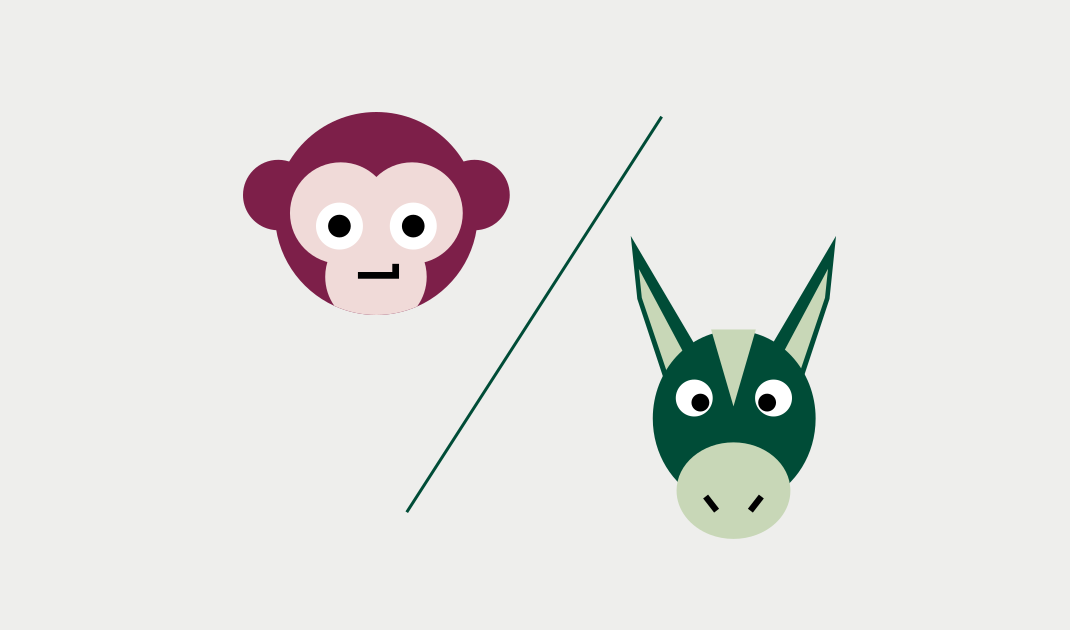
Starting from a Safe Distance.
We begin our search from the comfort of our own desks. Diving into the depths of the internet, we hope to find the first solid clue. But disappointment sets in quickly. While there are a few articles that loosely reference the terms, there is no clear or consistent definition to be found. What we do encounter in abundance, however, are images—either of monkeys or donkeys hard at work.
Interesting, but not exactly helpful.
Leaving the Office Behind.
So we decide to leave the office and split up. Whatever the answer is, we are unlikely to find it sitting at our desks. To save time, one of us focuses on administrative workplaces, while the other explores warehouses and similar environments.
To our surprise, an early hypothesis is quickly confirmed: the behavior attributed to animals translates remarkably well to human work situations. With our newly trained eye, we start noticing roles and tasks that clearly fall into one of these two categories. Yet hardly anyone is familiar with the terms Monkey Work and Donkey Work. When we explain them, we’re met with the occasional laugh, but also with skeptical looks, as if people are wondering what exactly we are implying about them.
What These Tasks Have in Common.
One thing becomes clear during our research: tasks that fall under these labels typically do not require specialized skills. General knowledge and a basic level of intelligence are usually sufficient. Importantly, we are not talking about professions, but about individual tasks that make up certain roles.
For example:
• A warehouse worker unloading incoming goods from containers: Donkey Work
• A sales representative manually entering hundreds of contact details into a CRM system: Monkey Work