Trade Show Follow-Up Checklist: Unlock the Real Key to Success.

The trade show is over, your booth has been taken down and you’re now left with a stack of business cards. Now comes the phase that ultimately determines whether your trade show investment pays off. To make sure the time and budget you put into the event translate into real business results, it’s important not to lose momentum. Below, we’ve outlined the key levers that matter most in trade show follow-up.
Careful follow-up and structured analysis are the foundation for turning trade show contacts into new customers or business partners. If you want your collected leads to become more than useless records in a database, the importance of post-show follow-up shouldn’t be underestimated.
Fast Follow-Up, Real Results: Why Speed Counts.
Only about 7 percent of trade show attendees arrive with a concrete purchase intention. That makes timely, well-prepared follow-up especially valuable as a way to anchor the conversation and keep the interaction top of mind.
Potential customers, whether or not they initially intended to buy, are also talking to competitors. Acting quickly reduces the risk that someone else reaches out first. Prompt, thoughtful follow-up signals genuine interest and is generally perceived very positively by prospects.
Follow-Up Starts on the Show Floor.
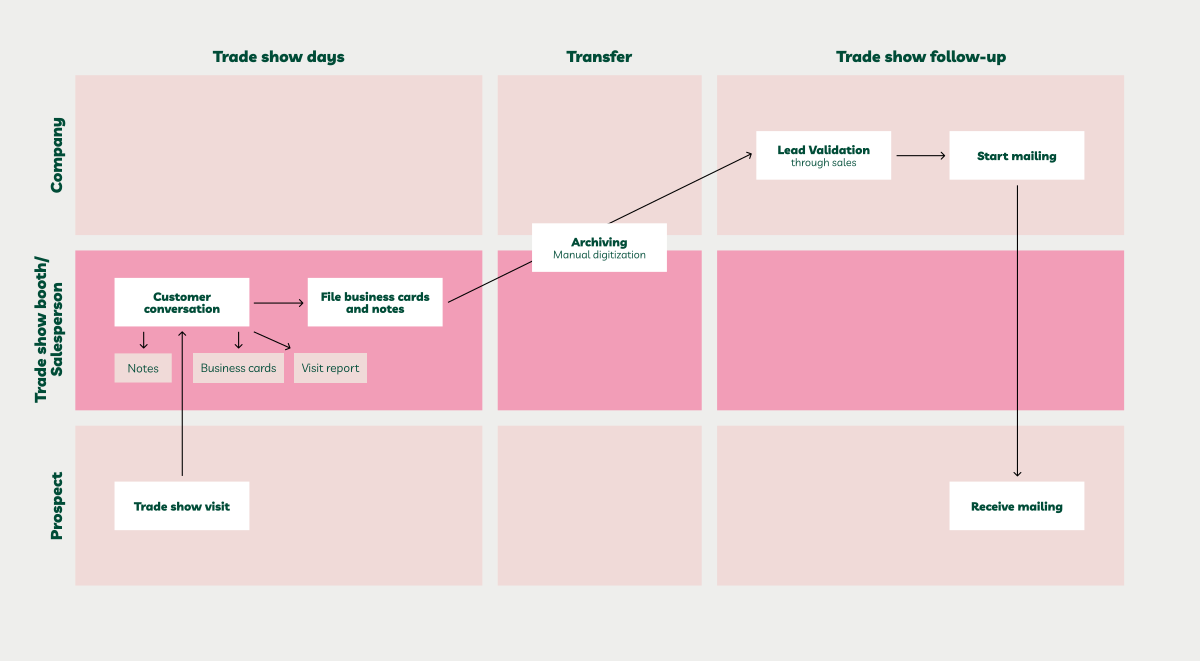
Effective follow-up doesn’t begin after the event; it starts during the trade show itself. Detailed notes and fully completed visit reports make it much easier to reference the original conversation later and leave a professional impression. Business cards should be clearly attached to these notes to avoid mix-ups and unnecessary paperwork.
Reviewing and Digitizing Notes and Visit Reports.
There’s no time for rest once the show ends. The next day marks the start of classic follow-up work: sorting and reviewing notes and visit reports to assess opportunities for new business.
This is also where much of the manual effort begins. Notes often need to be typed up and transferred into a CRM system, which can be time-consuming—especially after a successful event with many conversations. Digital questionnaires on mobile devices used by the sales team can help avoid paper overload at this stage.
Maintaining and Validating Contact Data.
As visit reports are digitized, sales teams should start validating leads and transferring all contact details and business cards into the CRM system. Manual validation and data entry are labor-intensive and often involve repetitive copying or typing.
Specialized lead management tools that scan business cards can help streamline at least the digitization step and reduce manual effort.
Timely, Personalized Follow-Up Emails.
Once contacts have been cleaned up and entered into the system, the next step is personalized follow-up communication related to the trade show topics. These messages should be as individual as possible and ideally offer a clear option for a follow-up conversation or meeting.
Streamlining Trade Show Follow-Up with snapAddy VisitReport.
Trade show follow-up can be incredibly time-consuming. To streamline this process, we developed snapAddy VisitReport.
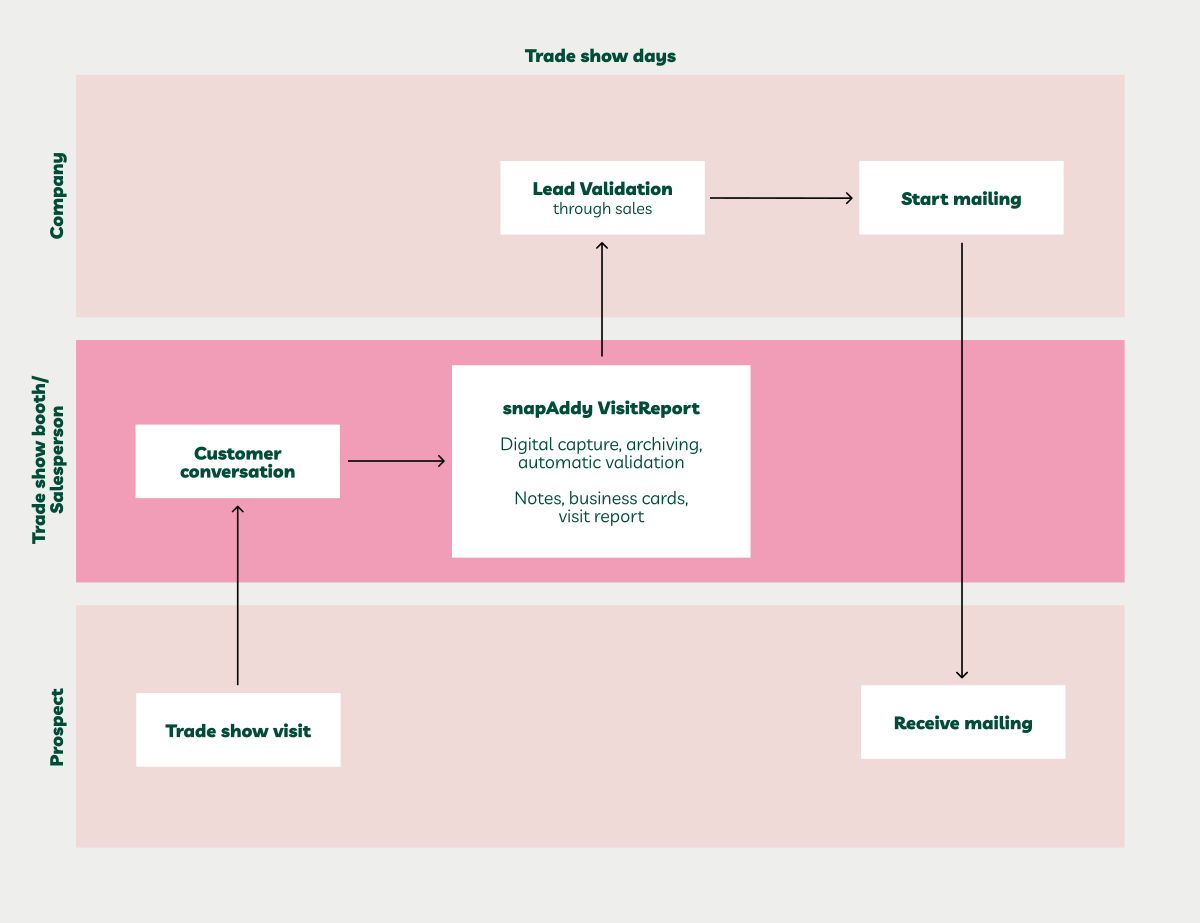
With snapAddy VisitReport, all the tedious tasks (digitizing, archiving, and validating your trade show data) are handled automatically. Customer meetings are conducted on a tablet, where notes and visit reports are recorded and saved directly in your CRM. You can even update reports on the spot to capture real-time insights from the show.
Business cards? They’re no problem. Use the built-in card scanner to digitize them instantly, and the validation process kicks in automatically. By the time your meeting ends, all the information you need for follow-up mailings is already in your CRM.
Ready to simplify your trade show follow-up? Try snapAddy VisitReport with the business card scanner—completely free of obligation. Our team is happy to walk you through it.
Trade Show Follow-Up Checklist.
To wrap up, here’s a structured checklist summarizing the key points. One important takeaway: trade show follow-up should be planned before the event, ideally as part of a defined workflow.
- Structure the follow-up process
How exactly does follow-up work for your trade show team? This is a fundamental question. How are leads captured—on paper or digitally? Is marketing automation used for thank-you emails? How are high-priority leads handled—do they receive personal outreach? Your follow-up process should be designed around your objectives and the specifics of your product or service.
- Timing of personal outreach
In general, faster follow-up is better. There are exceptions, of course, but based on experience, thank-you emails are often sent very soon after the conversation—sometimes within minutes when marketing automation is in place.
- Track success using relevant KPIs
Without measurement, it’s difficult to assess trade show performance. Key metrics such as revenue per customer, conversations per sales representative, or time to follow-up are essential for evaluating outcomes. If success can’t be quantified, it’s hard to determine whether a trade show presence was worthwhile.
- Data management and CRM maintenance
One frequently underestimated aspect of trade show follow-up is managing existing data. Once a new contact is created in the CRM, workflows should account for the fact that contact details change over time. As the person responsible for the trade show, you’ll need a plan for ongoing data maintenance—software solutions can provide meaningful support here.