Cartes de visite NFC : le trait d'union entre tradition et numérisation.
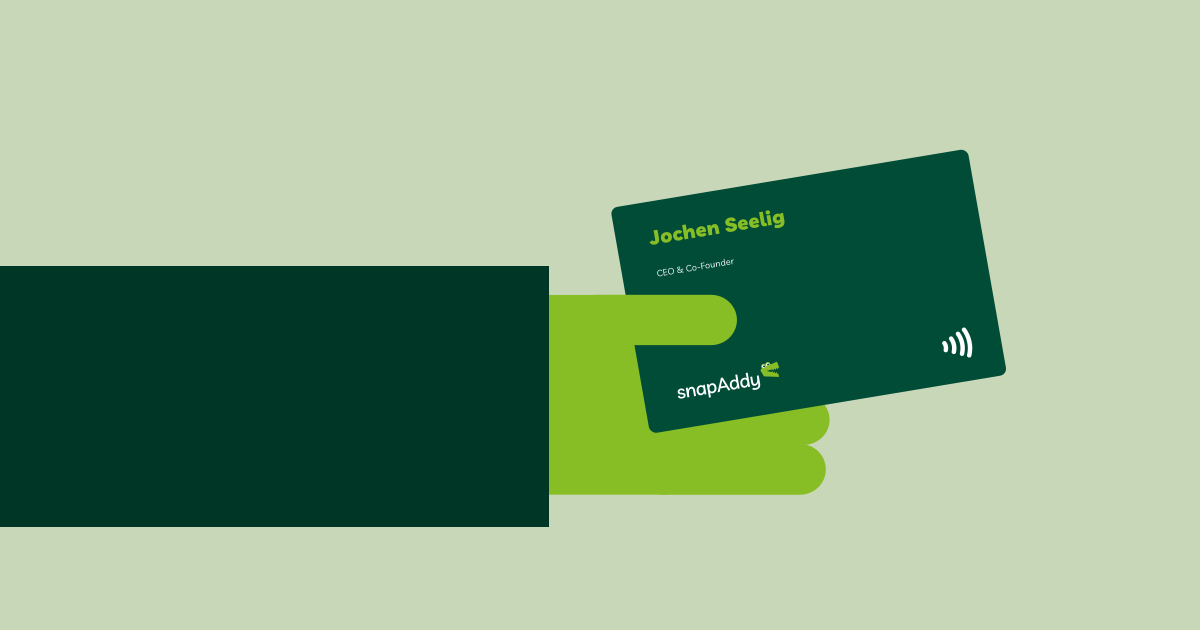
La Near Field Communication (NFC) est une technologie qui a considérablement élargi les possibilités d’échange de petites quantités de données entre objets. Elle permet une communication sans fil à très courte distance, en s’appuyant sur les technologies RFID (radio-frequency identification). À grande échelle, la NFC a d’abord été utilisée pour le paiement sans contact, par exemple pour régler une facture avec un smartphone.
Échanger des données de contact via NFC
Entre-temps, de nombreux autres cas d’usage se sont imposés, ce qui nous amène au sujet qui nous intéresse ici : les cartes de visite NFC. Sur une carte de visite avec NFC, les informations stockées sur la puce NFC – comme les coordonnées et des liens vers des profils en ligne – sont récupérées simplement en l’approchant d’un smartphone compatible. Le volume de ces données, essentiellement textuelles, reste en effet très limité.
It makes no difference whether you use an NFC business card for iPhone or an NFC business card for Android: modern smartphones on both platforms support the technology without any issues.
Ce processus d'échange fluide réunit en une seule étape la mise en relation physique et numérique. Le développement de la carte de visite NFC marque ainsi une avancée significative dans le domaine du networking personnel et professionnel. Sa popularité croissante reflète aussi le besoin grandissant de solutions numériques, efficaces et plus respectueuses de l'environnement dans tous les aspects de la vie des affaires.
Aperçu des avantages et inconvénients des cartes de visite classiques, numériques et NFC
Même si les cartes NFC partiellement numériques et les cartes de visite entièrement numériques gagnent du terrain, les versions imprimées restent encore les plus répandues. Mais en quoi se distinguent-elles précisément les unes des autres ? Quels sont leurs avantages et leurs limites ?
Les cartes de visite classiques restent appréciées pour leur simplicité et leur acceptation quasi universelle. L’importance de leur design et de leur remise quasi cérémonielle dans certaines cultures ne doit pas non plus être sous-estimée. Leur principal inconvénient tient toutefois à leur nature statique : une fois imprimées, les informations ne peuvent plus être mises à jour sans lancer un nouveau tirage. Cela entraîne des coûts inutiles, des processus de travail peu efficaces et un gaspillage de ressources que, dans un contexte de systèmes de management environnemental certifiés ISO et de critères de durabilité pour les fournisseurs, de nombreuses entreprises ne peuvent plus – et ne veulent plus – assumer.
Les cartes de visite numériques (sous forme d’applications) représentent le stade le plus abouti de la mise en réseau numérique et offrent une flexibilité totale pour la mise à jour des données. Aucun service RH n'a besoin de faire préparer un modèle d'impression par un prestataire ou par le marketing, aucun acheteur n'a à intervenir, plus de cartes imprimées obsolètes finissant à la poubelle. Les cartes de visite numériques professionnelles se tiennent à jour automatiquement, car elles sont reliées à un Active Directory ou à un logiciel de gestion des ressources humaines. En théorie, chaque personne dans l'entreprise pourrait même gérer elle-même sa carte de visite numérique. Reste à savoir si, dans toutes les cultures, les interlocuteurs professionnels se réjouissent vraiment de devoir scanner un QR code. Il n'en demeure pas moins que la numérisation de fond du monde des affaires progresse, à l'échelle mondiale et indépendamment des cultures.
La question de savoir combien de temps encore l’aura de la carte de visite imprimée résistera se pose donc légitimement.
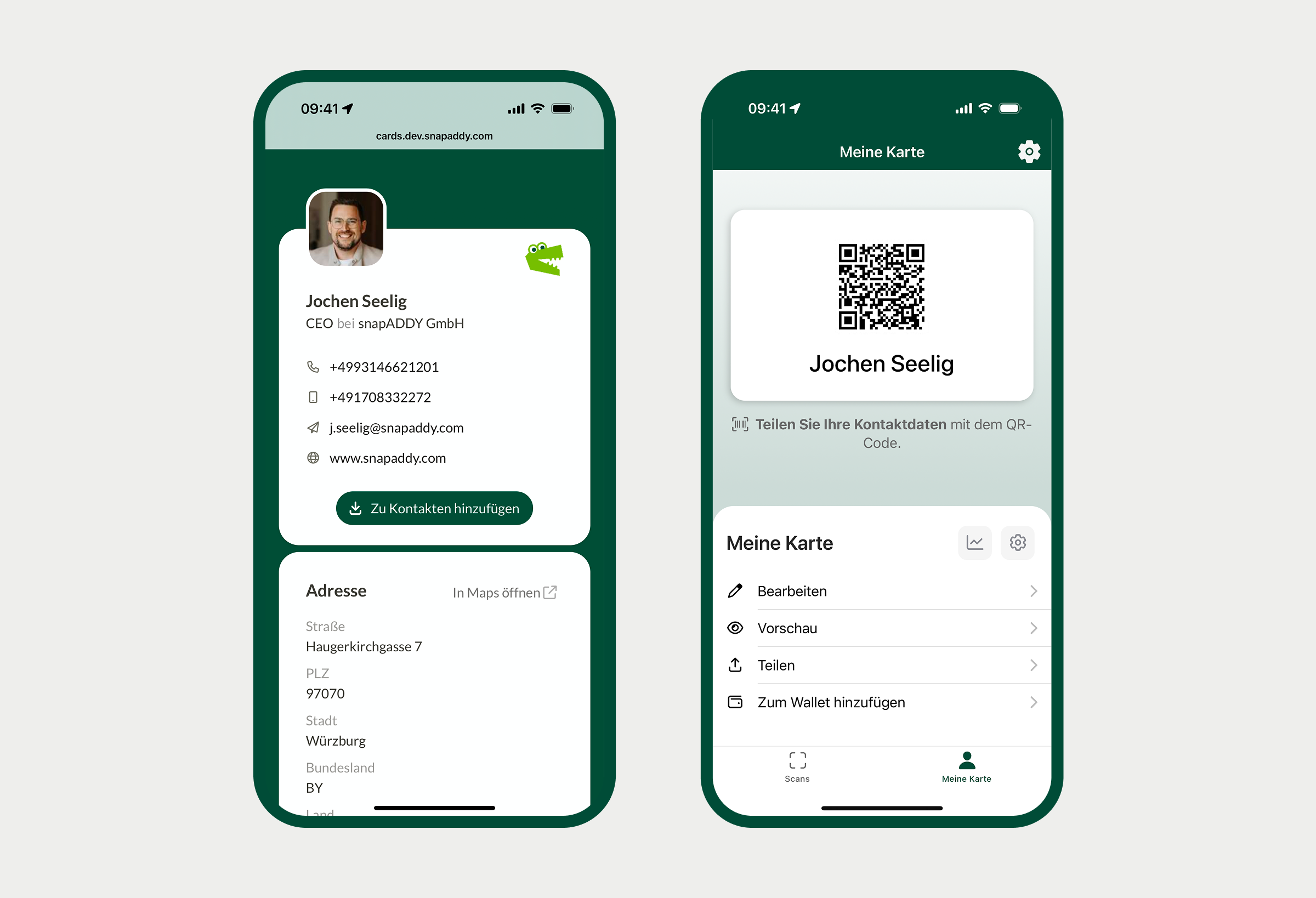
- Les cartes de visite NFC offrent une solution dynamique. Une carte de visite avec NFC n’est pas seulement un support d’échange physique, elle permet aussi de mettre à jour rapidement les informations enregistrées. Diverses applications pour iOS et Android permettent à pratiquement toute personne de garder une carte de visite NFC à jour à l’aide de son smartphone, qu’il s’agisse d’une carte de visite NFC pour iPhone ou pour des appareils Android. Les cartes NFC constituent un compromis entre les deux mondes. Elles combinent certes les avantages des deux autres variantes, mais ne les remplacent totalement dans aucun domaine et peuvent, dans certaines situations, s’avérer problématiques. Je peux ainsi remettre solennellement une carte NFC à un partenaire commercial asiatique, mais je devrais en principe la reprendre immédiatement après pour la réutiliser, ce qui serait perçu comme un affront. Pourquoi ne pas la laisser tout simplement au client ? Parce que cela annulerait à nouveau l’avantage en matière de durabilité par rapport à la carte imprimée. Il faudrait calculer combien de fois une carte de visite NFC doit être utilisée pour être réellement plus durable qu’une carte papier à usage unique.
Cartes de visite NFC : production, utilisation, manipulation.
Production et commande : la fabrication de cartes de visite avec NFC combine des procédés d’impression traditionnels avec l’intégration de tags NFC. Des plateformes en ligne personnalisées offrent de vastes possibilités de configuration, depuis le design jusqu’au choix des informations à stocker.
Utilisation : l’usage d’une carte de visite NFC est extrêmement simple. Il suffit de l’approcher d’un appareil compatible NFC pour transmettre les informations enregistrées. L’appareil émet alors une impulsion électrique vers la carte afin d’activer la puce NFC. Le caractère universel de cette technologie la rend compatible avec un large éventail de smartphones et de tablettes, qu’il s’agisse d’iPhone ou d’appareils Android.
Manipulation : malgré la technologie avancée, les cartes de visite NFC restent aussi simples à manipuler que leurs équivalents traditionnels. Il convient simplement de veiller à protéger les tags NFC intégrés des conditions extrêmes (par exemple forte chaleur, humidité ou contraintes mécaniques telles que des plis) afin de garantir leur bon fonctionnement dans la durée.
Les cartes de visite NFC : un pont entre physique et numérique.
Les cartes de visite NFC relient la remise physique à l’échange de données numérique : les données de contact peuvent être partagées rapidement, sans renoncer à la transmission en main propre de la carte de visite classique.
Elles déploient tout particulièrement leur valeur ajoutée lors des salons et événements.
Les atouts des cartes de visite NFC :
Échange rapide : les données de contact peuvent être transférées immédiatement
Toujours à jour : les informations peuvent être modifiées à tout moment
Moins de consommation de papier : réduit les ressources nécessaires aux cartes de visite classiques
L’échange personnel de données de contact est préservé
Les cartes de visite NFC facilitent ainsi la transition de la carte physique vers la carte de visite numérique, en particulier dans les contextes où la remise personnelle reste attendue.
Avec snapAddy, concilier les deux mondes – de la carte de visite NFC à la solution entièrement numérique
snapAddy vous accompagne dans l'ensemble du processus de numérisation de vos données de contact, des cartes de visite NFC de haute qualité à la carte de visite numérique à part entière. Si vous souhaitez organiser progressivement la transition de la carte physique vers le numérique, vous êtes au bon endroit avec snapAddy : nos cartes de visite NFC associent la dimension familière de la carte physique aux avantages du numérique. Vous conservez ainsi le caractère personnel de la remise, tout en gardant vos données de contact toujours à jour et immédiatement accessibles par smartphone.
Si vous préférez passer directement au tout numérique, optez pour snapAddy BusinessCards : une solution gratuite, personnalisée selon votre charte graphique et, sur demande, dotée de fonctions de gestion à l'échelle de l'entreprise.
Quel que soit votre niveau d'avancement entre carte de visite physique et carte de visite numérique, snapAddy vous accompagne à chaque étape. Commencez gratuitement dès maintenant ou prenez rendez-vous.